Helblinghaus Innsbruck: A Rococo Masterpiece in the Old Town
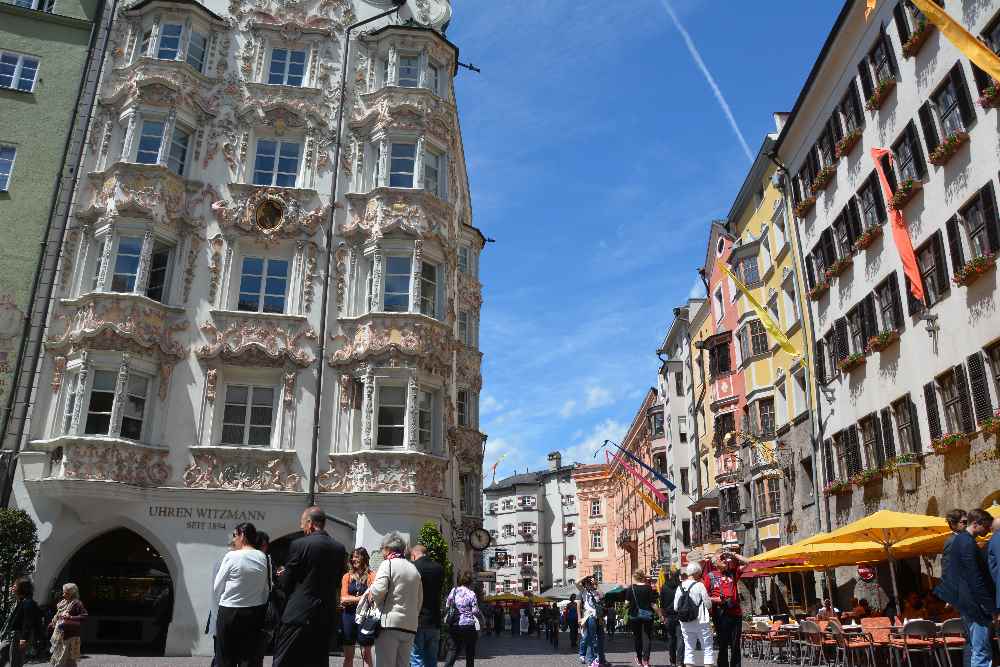
The Helblinghaus in Innsbruck’s historic district is a true architectural gem, famous for its incredibly playful Rococo stucco facade. Originally built in the 15th century as a late-Gothic townhouse, it underwent a magnificent Baroque transformation between 1725 and 1730.
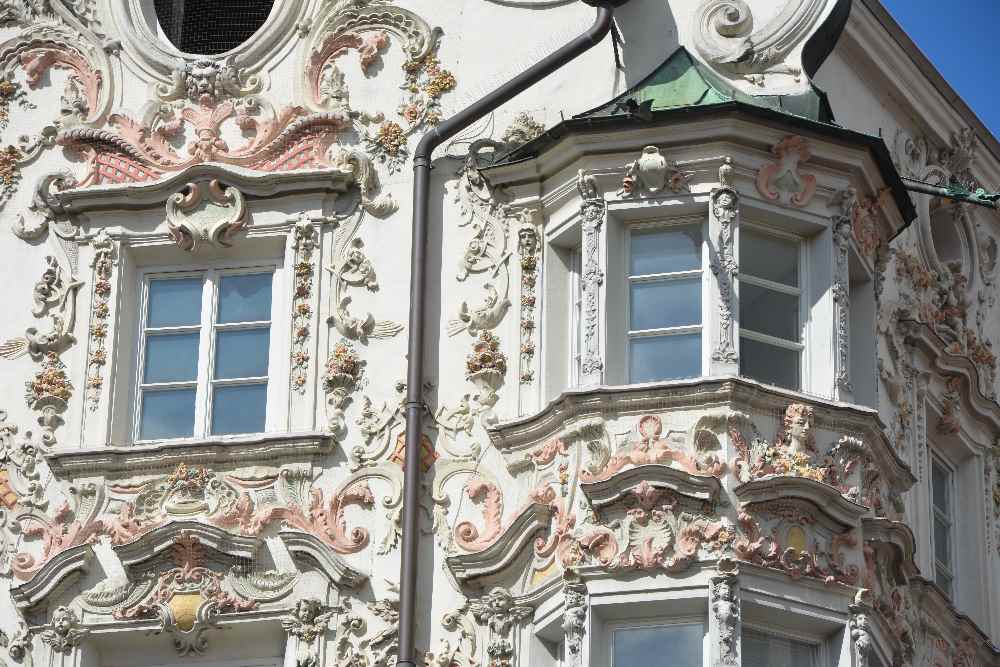
Master craftsman Anton Gigl, a representative of the renowned Wessobrunner School, adorned the exterior with an abundance of floral garlands, fruit clusters, shells, cherubs, and acanthus ornaments. This “icing-like” spectacle of stucco is a masterclass in how architecture can capture light and shadow, making it one of the most photographed buildings in the city center.
The Architecture of the Helblinghaus: Where Gothic Meets Baroque
When standing in front of the Golden Roof, it is worth turning your gaze slightly to the side. The Helblinghaus almost steals the show from its famous neighbor. Its facade is so lavishly decorated that it is difficult to know where to look first. Together, the ornate stucco and the gleaming golden shingles of the roof create a unique artistic ensemble that is unparalleled in the Alpine region.
The building is a fascinating hybrid of styles. While the rich decoration is purely Baroque and Rococo, the structural core remains Gothic. During a restoration in 1932, remnants of late-Gothic ornamentation were discovered on the southern bay windows, proving that the house has evolved through centuries of architectural trends.
The History and Name: Why is it called Helblinghaus?
The history of the house dates back to the 15th century, but its most significant change occurred in 1725 when it was purchased by Johan Fischer, the cashier of the mint in Hall. It was during his ownership that the impressive stucco work by Anton Gigl was commissioned.
The name “Helblinghaus” originates from Sebastian Hölbling, who owned the building between 1800 and 1827. During his time, he operated a café on the premises, which served as a popular local meeting point. Although the café has long since closed, the name has remained part of Innsbruck’s history for over 200 years.
Planning Your Visit: Tips for Photography and Sightseeing
Today, the Helblinghaus is privately owned and the interior is not open for public tours. However, the true attraction is the exterior. To see the facade at its absolute best, I recommend visiting in the afternoon. When the sunlight hits the stucco at an angle, the details pop, and the shadows accentuate the craftsmanship. Furthermore, since it is located in a pedestrian zone, the late afternoon usually means fewer delivery vehicles, allowing for an unobstructed view of the house.
Address & Location: The house is located at Herzog-Friedrich-Straße 10, 6020 Innsbruck. It sits directly at the intersection where the Old Town of Innsbruck meets the path to the Inn River, surrounded by other major landmarks like the Ottoburg and the Imperial Palace (Hofburg).
Insider Tip: A Bird’s Eye View
For a truly unique perspective of the Helblinghaus, you should climb the Innsbruck City Tower (Stadtturm). From the viewing platform at a height of 31 meters, you can look down onto the roofs of the Old Town. This elevated position allows you to admire the intricate details of the Helblinghaus facade and the Golden Roof from above. The 148-step climb is well worth it for the panoramic view of the mountains and the city.
–> Visit the Innsbruck City Tower
Useful Links for Your Trip:
- The World-Famous Golden Roof (Goldenes Dachl)
- Maria-Theresien-Straße: Innsbruck’s Magnificent Main Street
- the best places to visit in Innsbruck