Court Church Innsbruck: The Church with the “Black Men”
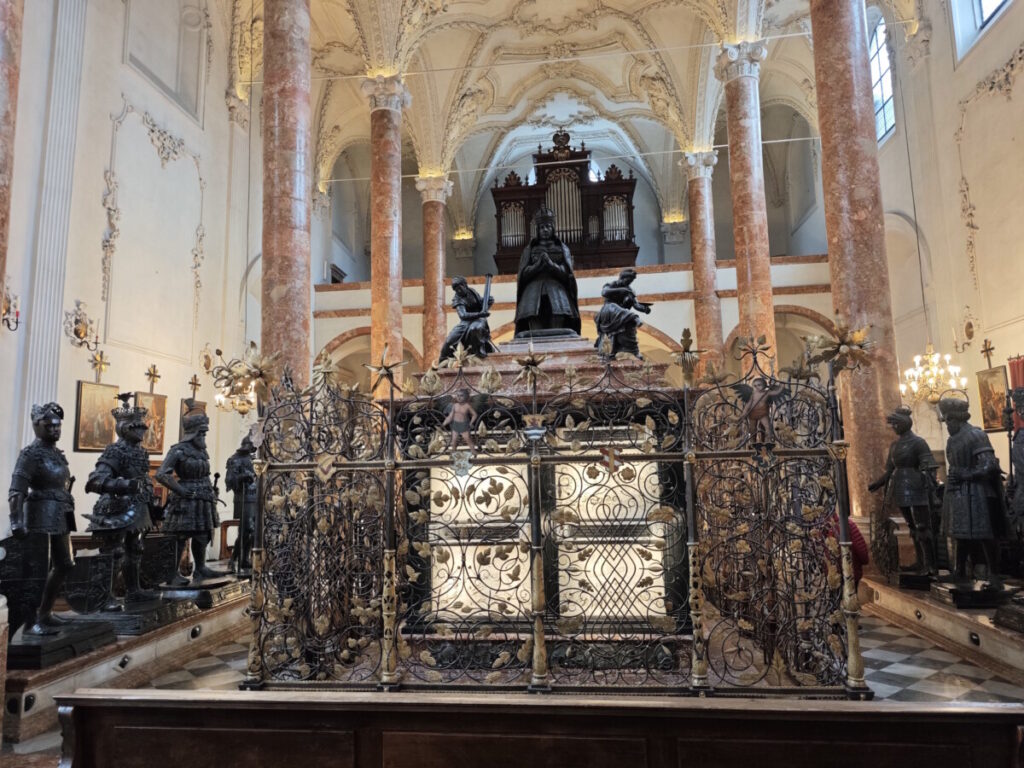
In the heart of Innsbruck’s Old Town lies the Hofkirche, a site locals simply call the “Schwarzmanderkirche” (Church of the Black Men). This unique nickname comes from the 28 larger-than-life bronze figures that stand guard over the most impressive imperial monument in the Alps.
While some might hesitate at the entrance fee, the Hofkirche Innsbruck is far more than just a place of worship—it is a world-class historical experience. Your ticket doesn’t just grant you access to the church; it includes a modern multimedia show and entry to the adjacent Tyrolean Folk Art Museum, making it a fantastic value for anyone exploring Innsbruck sightseeing.
The Legacy of Emperor Maximilian I
The story of the church is inseparable from Emperor Maximilian I, one of the most powerful rulers of the Habsburg dynasty. Before entering the church, visitors are treated to an impressive multimedia show that explains the Emperor’s life. Maximilian was a master of diplomacy and “marriage politics,” famously expanding his power through strategic alliances rather than just war.
Interestingly, the Emperor began planning his monumental tomb during his lifetime to ensure he would never be forgotten. Although he died in 1519 and is actually buried in Wiener Neustadt, his grandson, Ferdinand I, built the Hofkirche specifically to house the massive bronze ensemble the Emperor had envisioned.
The “Black Men”: An Eternal Guard
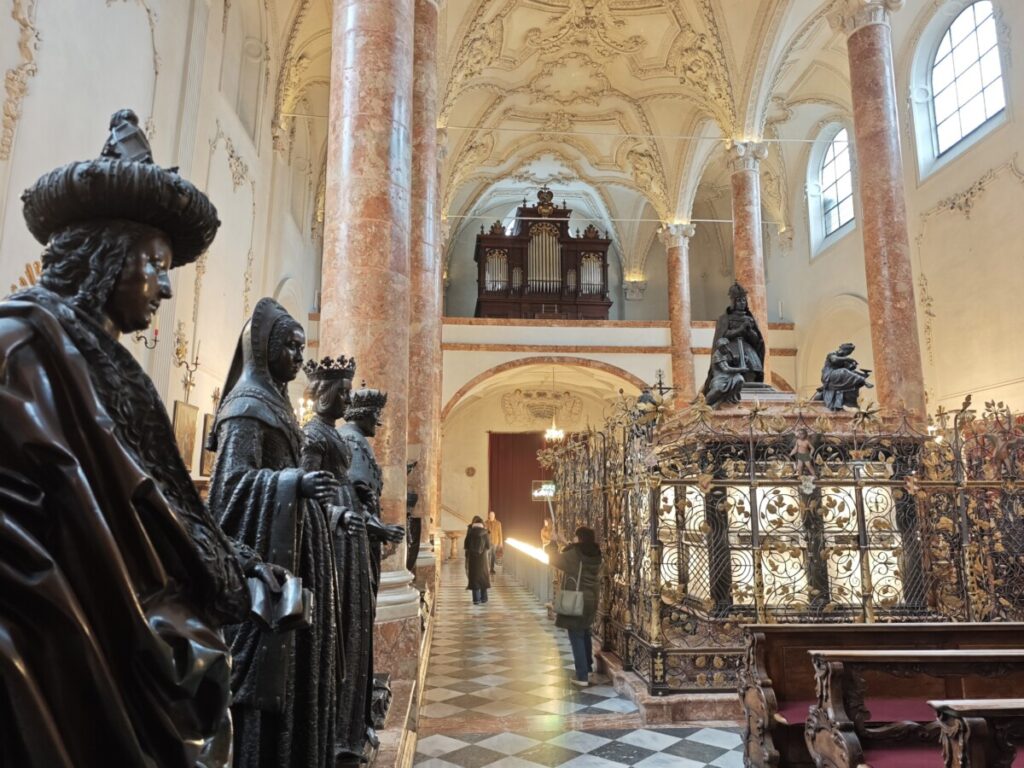
The interior of the Hofkirche is dominated by the monumental cenotaph (empty tomb) of Maximilian I. Surrounding it are the famous “Schwarze Mander”—28 bronze statues representing the Emperor’s ancestors and heroes of the past.
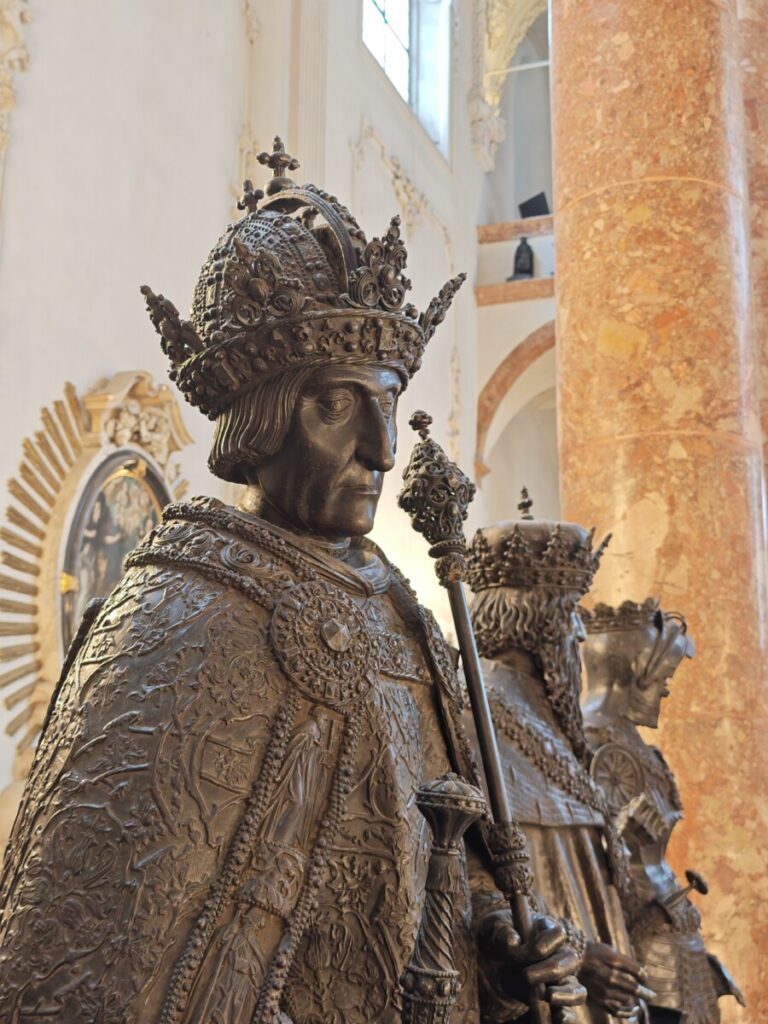
Despite the nickname, not all the figures are men; several powerful women of the Habsburg line are among them. These statues are masterpieces of Renaissance art. If you look closely at the bronze, you can see incredibly fine details, from the delicate folds of the fabric to the tiny links in the chainmail armor. Atop the black marble sarcophagus, a bronze figure of the Emperor kneels in eternal prayer.
The Silver Chapel and Tyrolean Heroes
A flight of stairs leads you to the Silver Chapel, a more intimate but equally lavish space. This was built as the final resting place for Archduke Ferdinand II and his wife, Philippine Welser. Its name comes from the stunning altar, which features a Madonna embossed in pure silver.
The church also holds a deep significance for the people of Tyrol as the burial site of Andreas Hofer, the famous freedom fighter. His marble tomb makes the Hofkirche a patriotic landmark as much as a religious one. Music lovers should also look up to see the Ebert Organ—dating back to the mid-16th century, it is one of the oldest playable organs in the world.
Planning Your Visit: Parking and Tips
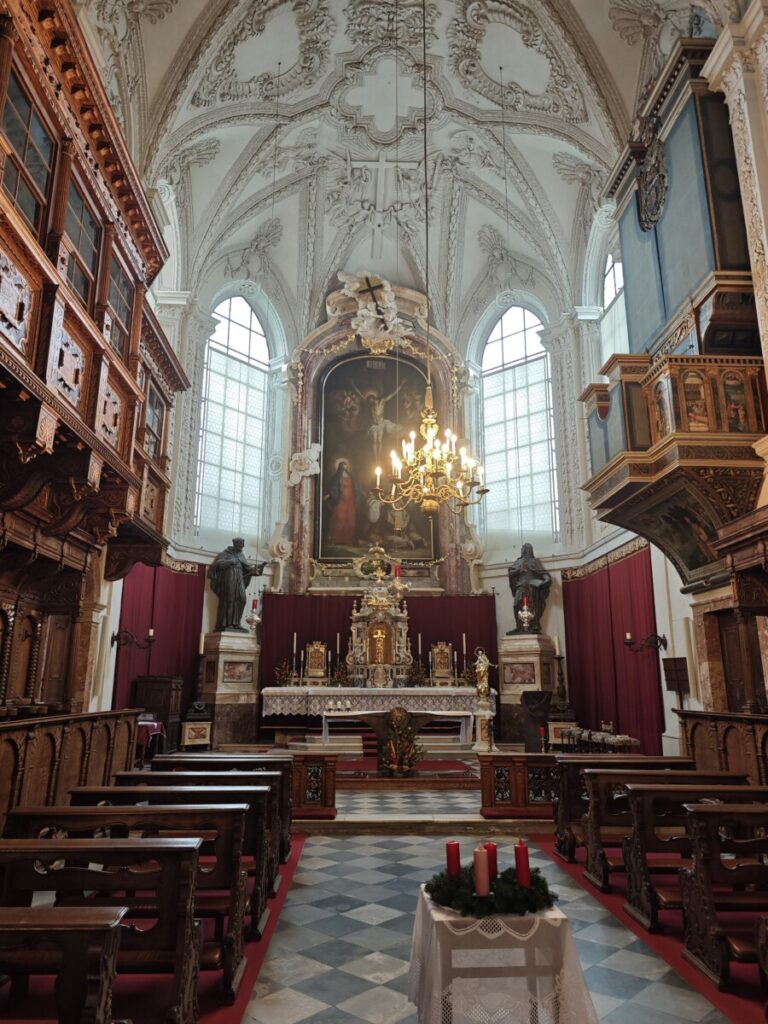
The Hofkirche is located right next to the Imperial Palace (Hofburg). It is a unique experience where half the church feels like a grand monument and the other half a traditional house of God.
- Parking: The most convenient option is the Congress Garage, just a 2–3 minute walk away. Alternatively, the City Garage or the Altstadtgarage at Innrain are great choices if you plan to visit the famos Golden Roof afterward.
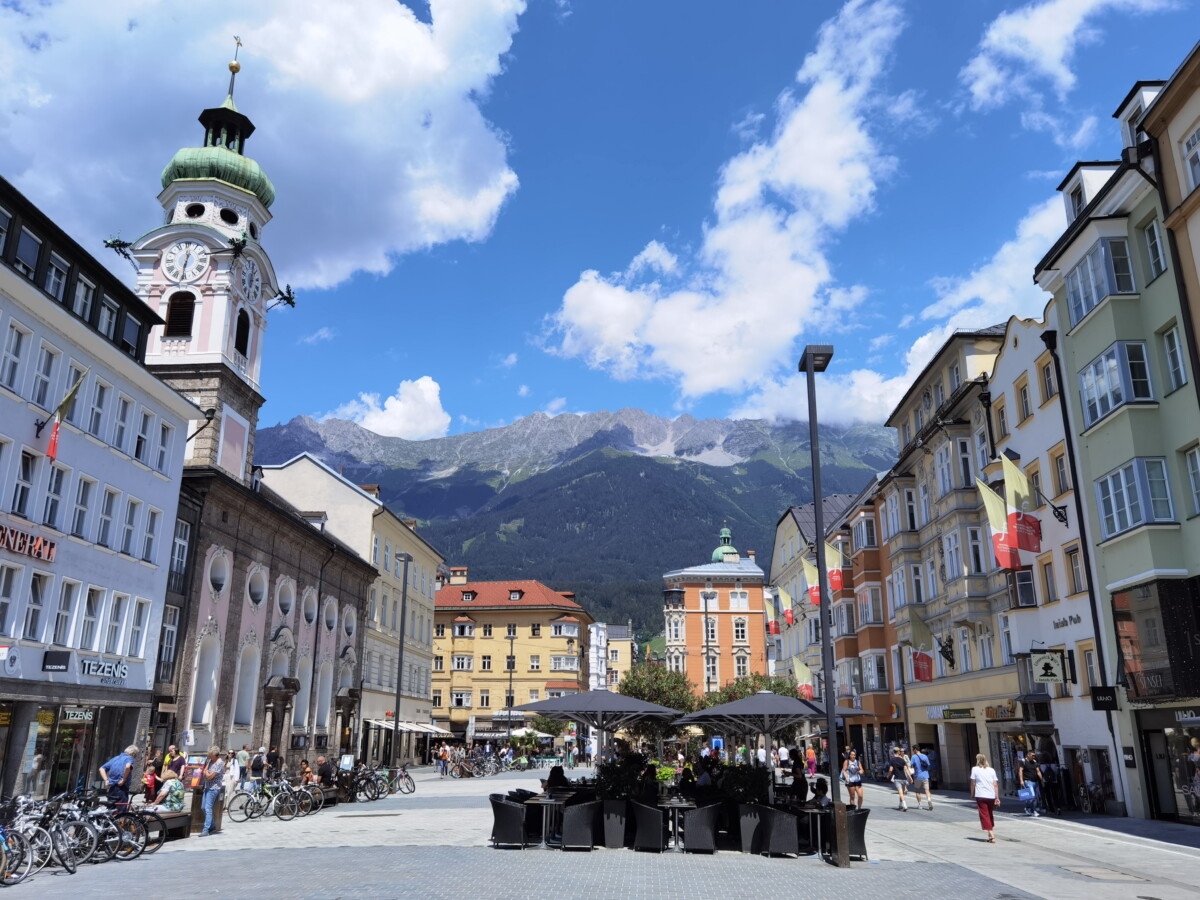
- Walking: From the church, it is just a short stroll to Maria-Theresien-Straße, Innsbruck’s premier shopping and strolling mile.